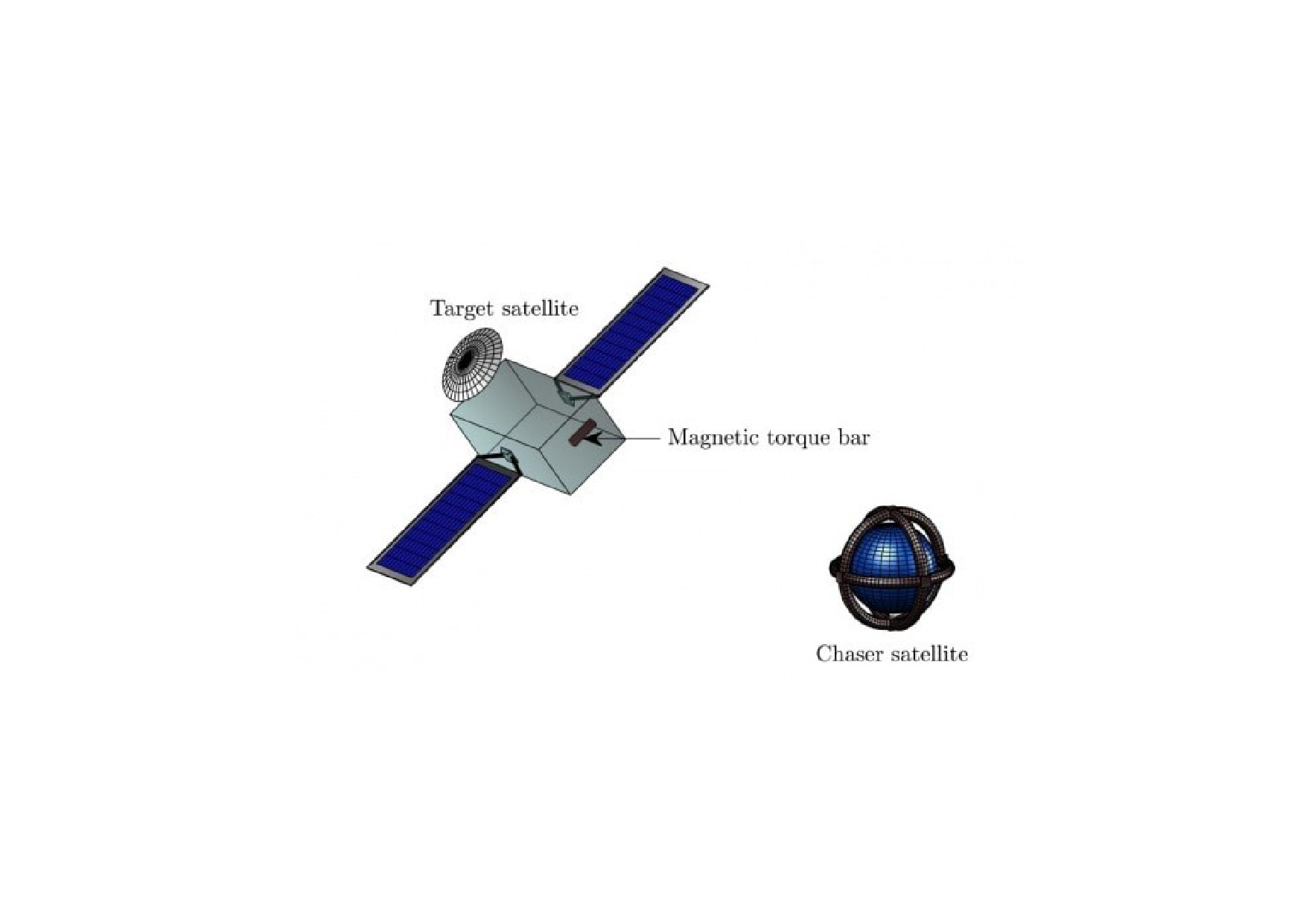
In near future, space debris could be cleaned up by “magnetic sweepers”. The idea comes from Emilien Fabacher, a researcher from the higher Institute of Aeronautics and Space at University of Tolosa, who, thanks to the support of the Networking/partnering Initiative of the Space Agency, could develop his idea.
The topic of in-orbit waste around our planet is nowadays highly discussed as part of space research. Indeed, man produces debris also in the space, because of those objects that have completed their working life.
Usually, we deal with whole satellites and the real problem is to remove them safely. So far, many ways have been tried to assure that : robotic arms, harpoons, nets.
Emilien Fabacher, researcher from the Institute of Aeronautics and Space, thought of a new method to dolve this problem : a sort of magnetic hook.
SPACE MAGNET. “in order to catch a satellite and bring it out of the orbit in which it is at the moment, firstly we need to keep distance from it, trying not to let the “sweeper” satellite and the debris get directly in touch with each other, so to void any damage” Fabacher says, and he continues “the idea is to exploit the magnetic force to both attract and reject the satellite that we need to divest, or at least to geti t away from the orbit, partially or totally.
The satellites that have to be divested don’t need to be particularly equipped – the satellite that has to tow would attract the target one using some magnets to determine the direction, thanks also to the terrestrial magnetic field.
SWEEPERS’ TEAMS. The sweeper satellite needs a high magnetic field, and it could be generated by superconductive cables, cooled at cryogenic temperature. “This type of satellites could work in teams, flying in formations” says Finn Arkersen, ESA expert about flying and satellites’ formations. “This magnetic interaction without any kind of touch, could work along a 10-15 m distance and with a max discrepancy of 2°.
Emilien Fabacher has experimented in his doctoral thesis how techniques of control, navigation and orientation could work thanks to the combined use of powerful meeting simulators and magnetic interaction models, always considering the fact that terrestrial magnetosphere keeps changing.
Researches have been made possible thanks to Networking/Partnering Initiative of ESA, that supports University projects and research institutes with potential application in space matters. Emilien could also count on the help of ESA experts he had the chance to meet at the technical center in Netherlands.
As he says, he was “at the right place in the right moment” since the idea came during a discussion with ETA experts.
“It was amazing to find out that the concept was theorically achievable. We couldn’t know if it could have worked, but apparently phisics do!”
(Source: www.focus.it)